A concept map template gives you a starting structure for organizing what you know about a topic, with concepts as nodes and labeled lines showing how they connect. Instead of staring at a blank canvas, you start from a working example, adjust the nodes, edit the linking phrases, and end up with a map that fits how you understand the material.
This page collects free concept map templates you can open, edit, and expand. Every example below is a live interactive map on Heuristica. Click any preview to open the full map, then use the built-in AI to add nodes, rewrite labels, or branch into related topics. The library covers biology, anatomy, genetics, evolution, common health conditions, and a few physics topics.
What is a concept map template?
A concept map template is a pre-built concept map you can use as a starting point. The structure is already there: the main concept sits at the top or center, related sub-concepts branch out, and the lines between them carry short phrases that name the relationship. You replace, rename, or extend the parts you want and keep the parts that work.
Two things separate a concept map template from other graphic organizer templates:
- Labeled relationships. A concept map's value comes from the words on the connecting lines, not just the boxes. "DNA codes for proteins" tells you more than two boxes joined by a blank arrow.
- Hierarchy with cross-links. General concepts go higher in the map, specific ones branch lower, and cross-links connect ideas across branches. Mind maps radiate from a single center. Concept maps can have multiple entry points and richer internal structure.
For a deeper background on the format, read the concept map guide.
How to use these concept map templates
Each preview below links to a live concept map. Open one, and you can:
- Read through the existing structure. Get a feel for how the topic is broken down before changing anything.
- Expand any node with AI. Click a node and ask Heuristica to branch it into sub-concepts, examples, or related topics. The map grows as you study.
- Edit labels and linking phrases. Replace anything that doesn't match how you think about the topic, or rewrite the linking phrases in your own words. Reworded labels stick in memory better than copied ones.
- Save your version. Sign in and the map gets saved to your library, where you can keep editing it, share it, or turn it into flashcards.
- Branch into related maps. Most of these templates touch concepts that have their own dedicated maps. Hypertension links to blood and the endocrine system. Photosynthesis links to cellular respiration. Use them as a network, not single pages.
You don't need an account to view or expand a template. You only need one if you want to save your version.
Biology concept map templates
Biology covers more dense, interconnected material than most subjects, which is part of why concept maps fit it so well. The templates below are grouped by sub-area.
Cell biology
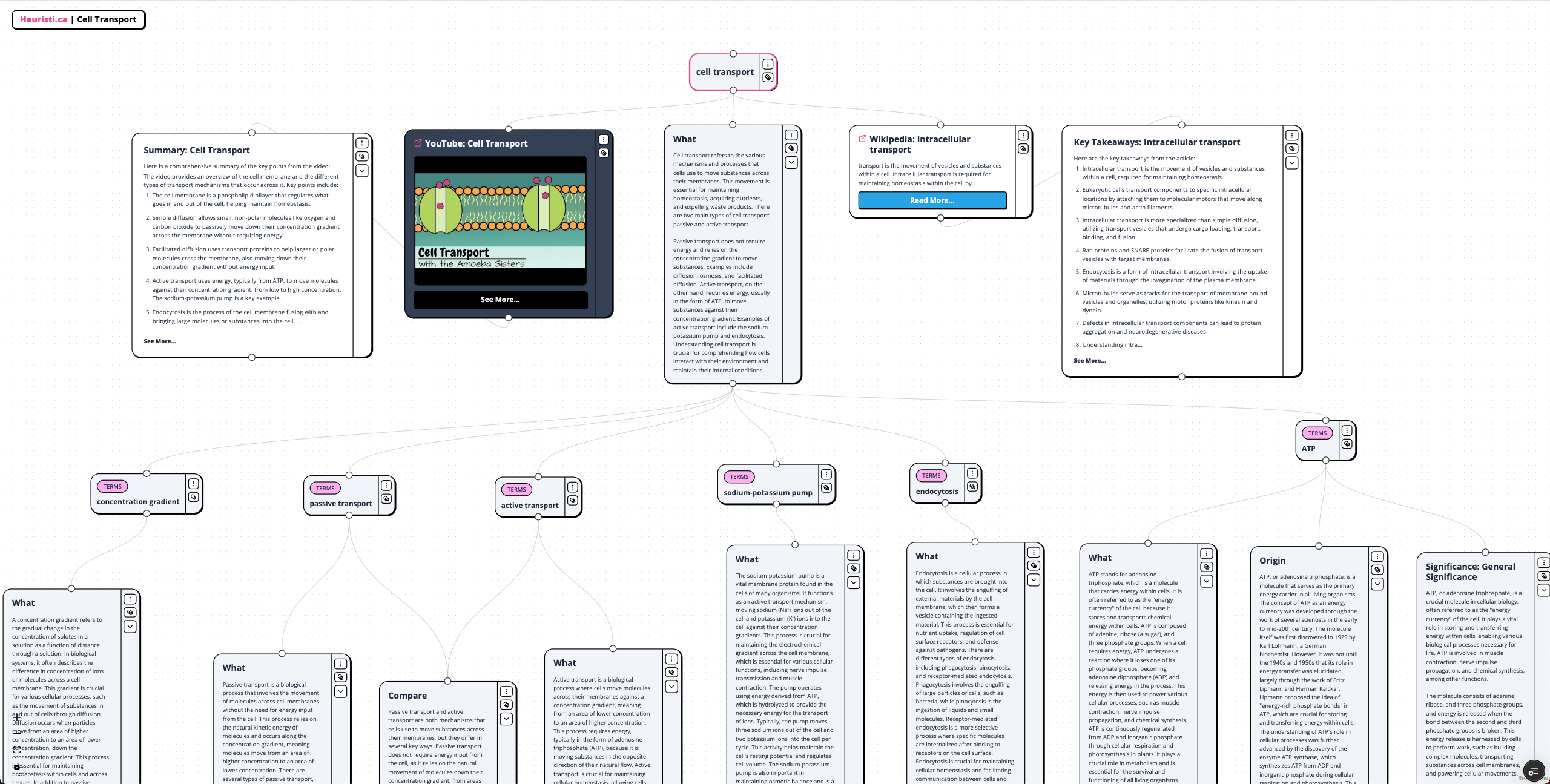
Open the cell transport concept map →
The cell transport template covers active transport, passive transport, osmosis, diffusion, and the membrane proteins that make each one work. Useful when you keep mixing up which processes need ATP and which don't.

Open the cellular respiration concept map →
The cellular respiration template walks through glycolysis, the Krebs cycle, and the electron transport chain, with the inputs and outputs of each stage labeled. Pair this with the photosynthesis map to see how the two processes feed each other.

Open the photosynthesis concept map →
The photosynthesis template covers the light-dependent and light-independent reactions, the role of chlorophyll, and how the products of photosynthesis become the inputs for cellular respiration.
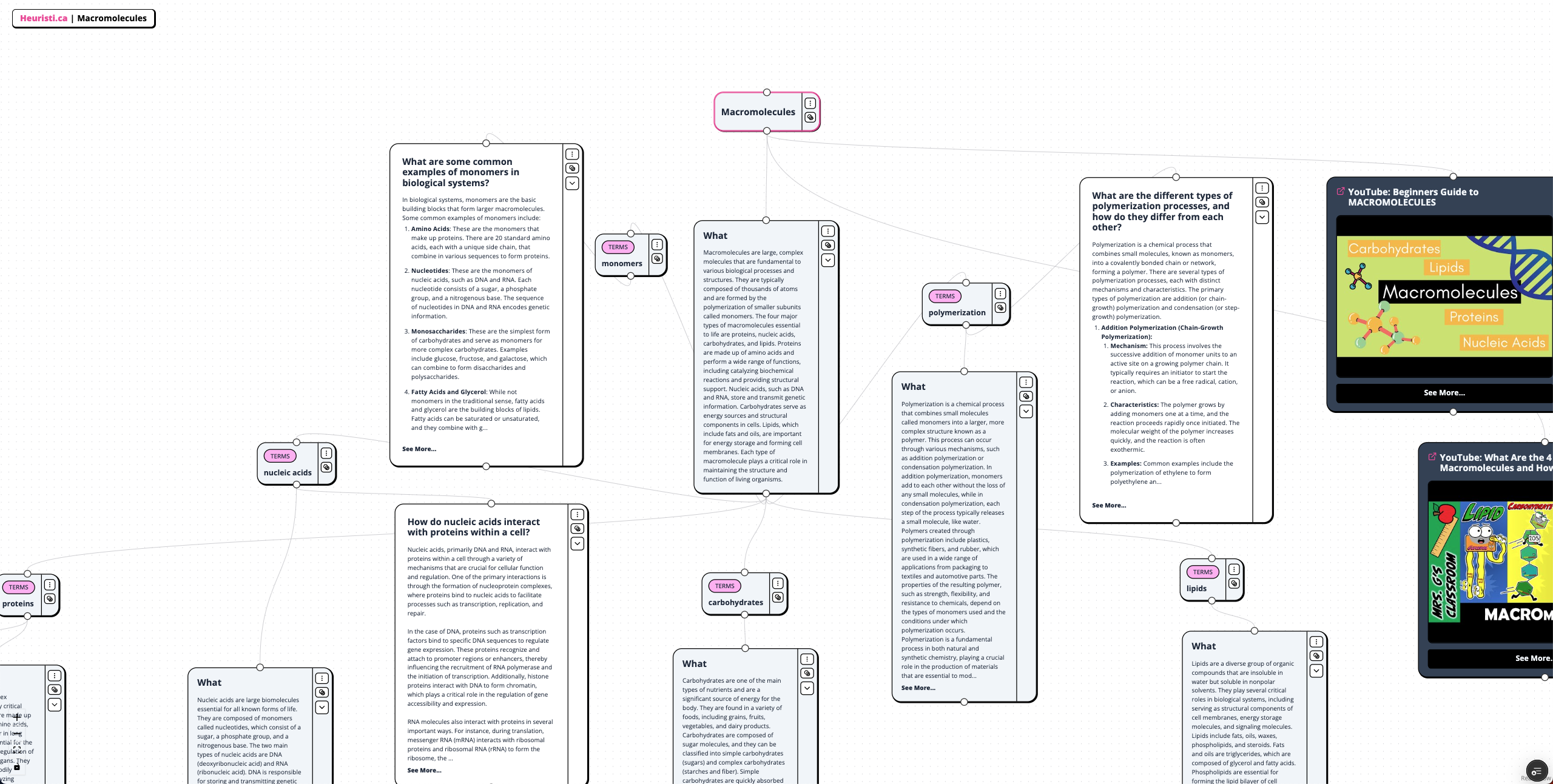
Open the macromolecules concept map →
The macromolecules template covers carbohydrates, lipids, proteins, and nucleic acids. Each branch shows the monomers, the bonds that form polymers, and the role of the macromolecule in a cell.
Genetics and reproduction
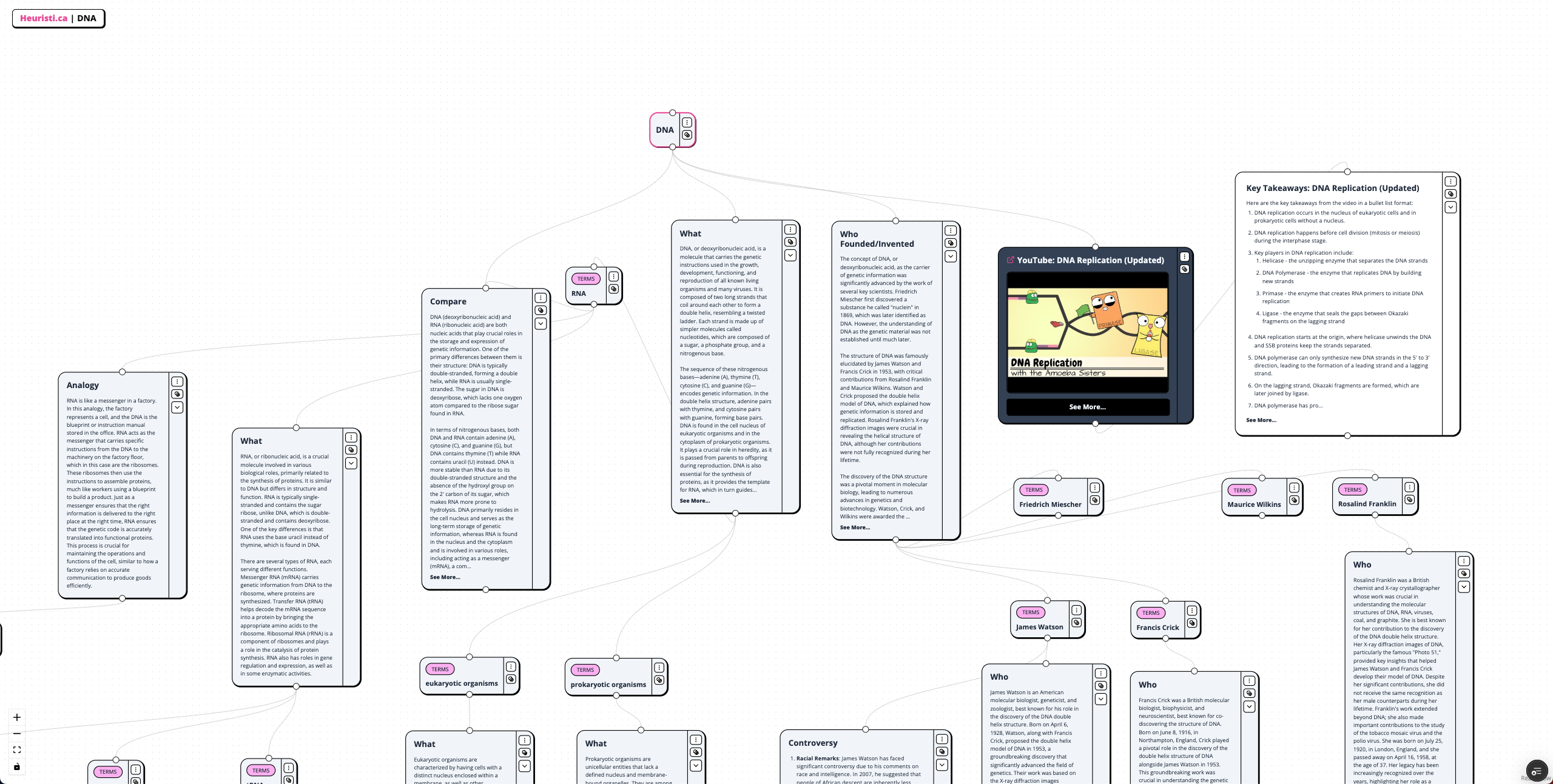
The DNA template covers structure (double helix, base pairing, nucleotides), function (replication, transcription, translation), and the relationship between DNA, RNA, and proteins. A good anchor map when you're also studying genetics or molecular biology.

Open the meiosis concept map →
The meiosis template breaks meiosis into its phases, from prophase I through telophase II, tracks how the chromosome number changes, and highlights the events that make meiosis different from mitosis (synapsis, crossing over, independent assortment).
Anatomy and physiology
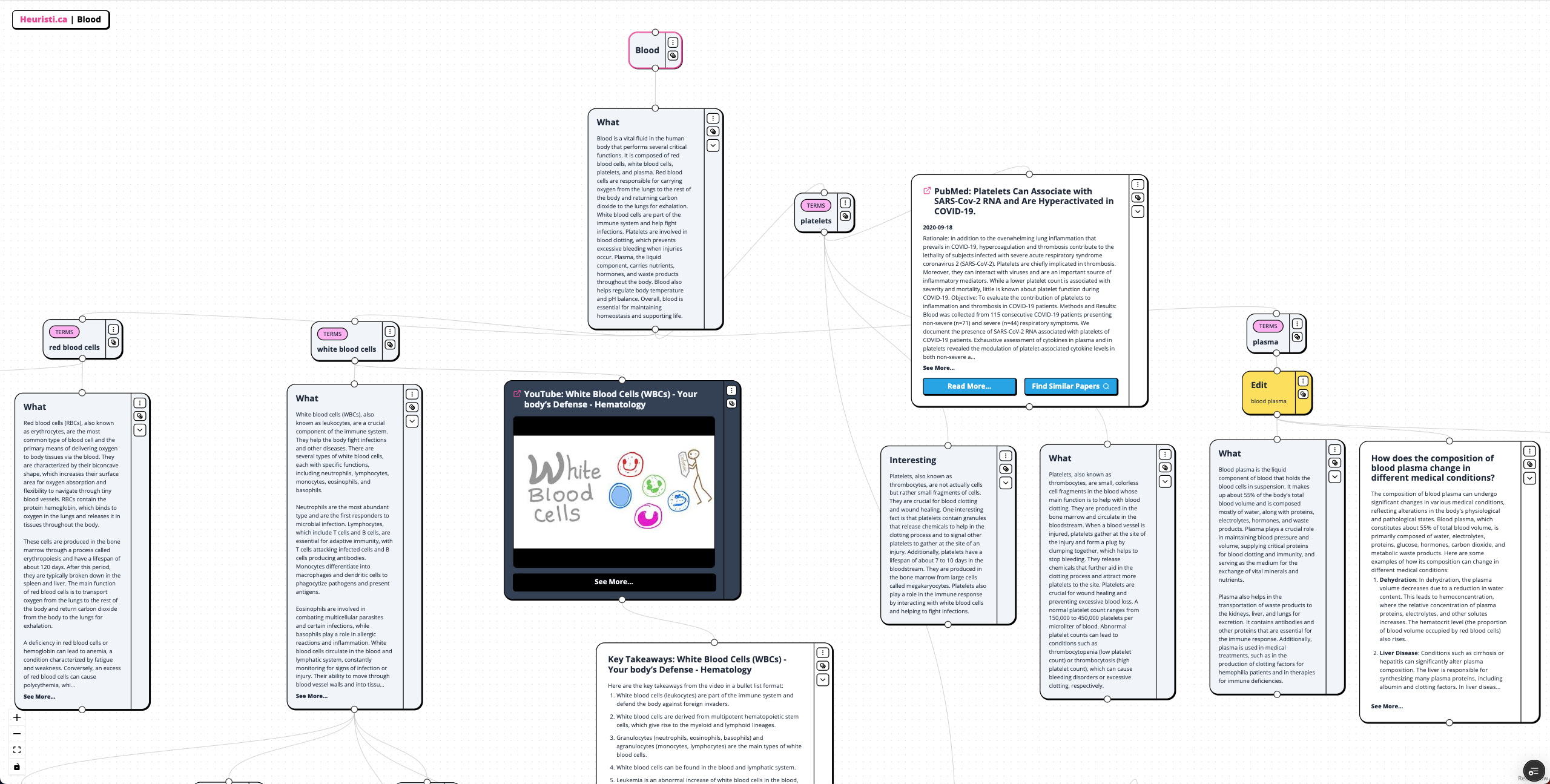
The blood template covers the components (plasma, red blood cells, white blood cells, platelets), the major functions, and the categories of disorders. A solid starter for any anatomy course or first-year nursing physiology.
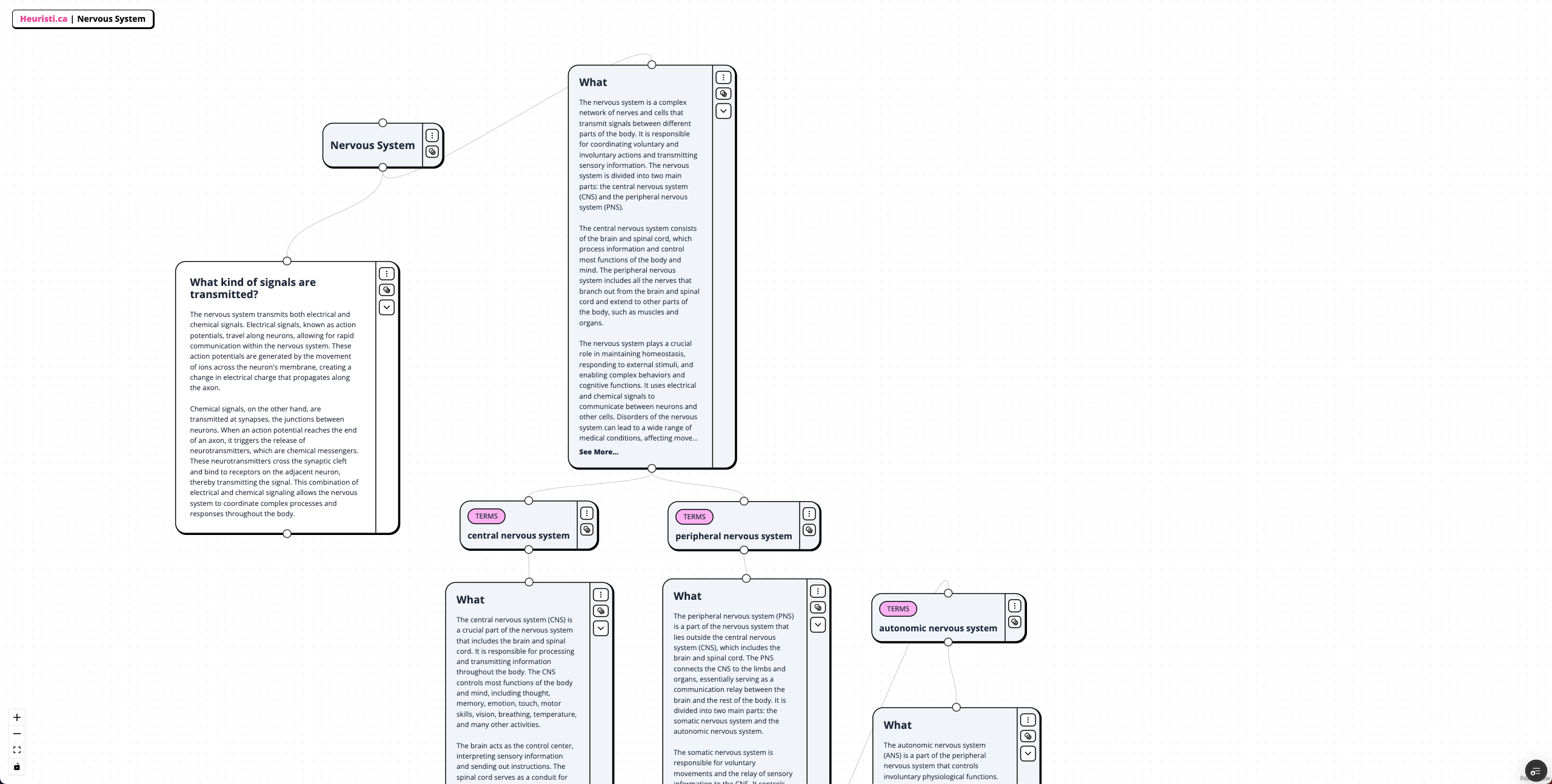
Open the nervous system concept map →
The nervous system template branches into the central and peripheral nervous systems, then breaks the peripheral side into somatic and autonomic, and the autonomic side into sympathetic and parasympathetic. Useful for keeping the hierarchy straight when terminology gets dense.
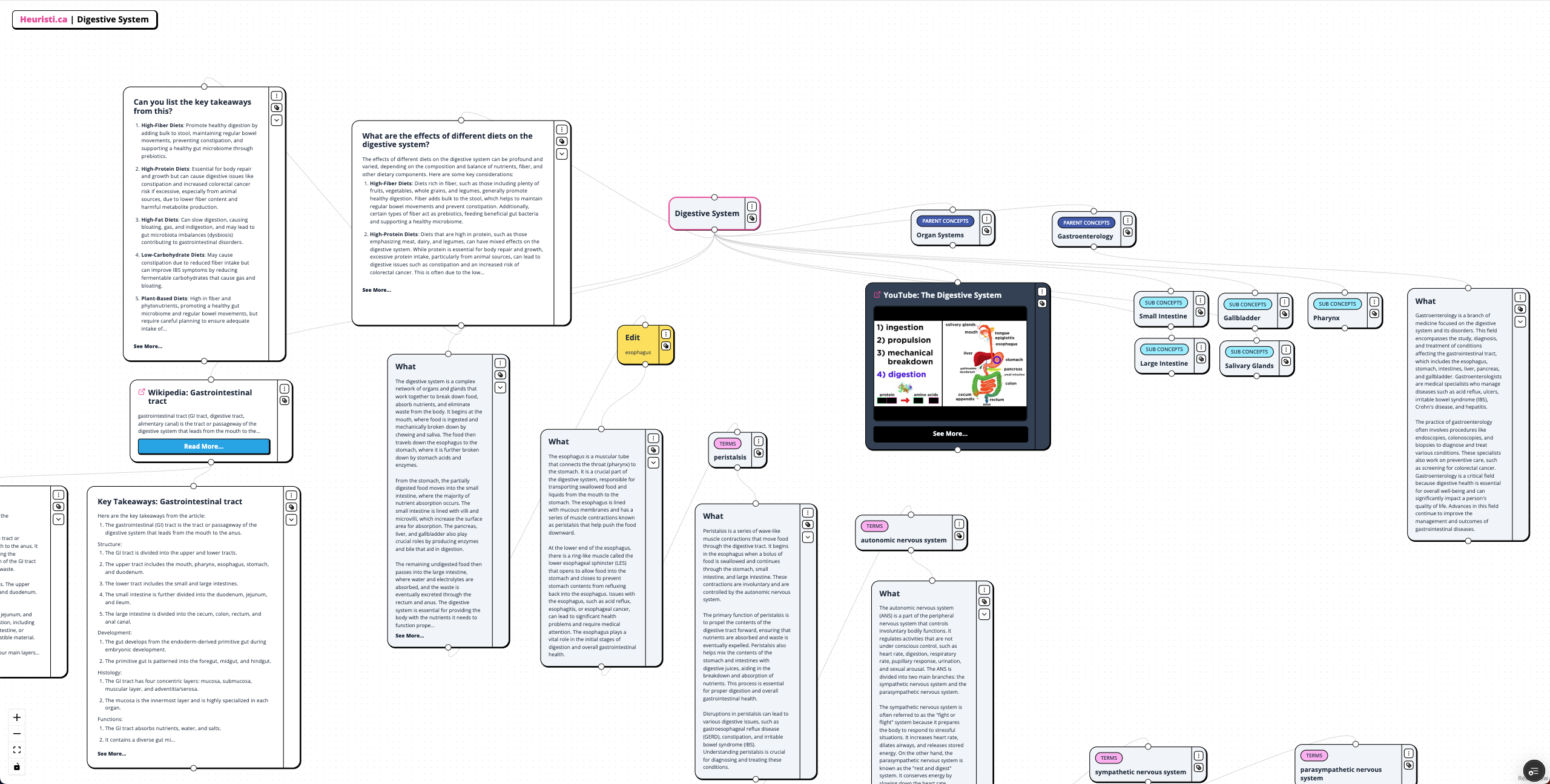
Open the digestive system concept map →
The digestive system template tracks food through the alimentary canal, names the accessory organs (liver, pancreas, gallbladder), and notes the type of digestion (mechanical vs. chemical) at each stage.

Open the endocrine system concept map →
The endocrine system template covers the major glands, the hormones they release, and what each hormone regulates. Branch into specific feedback loops (insulin and glucose, thyroid hormones, cortisol) when you need more depth.
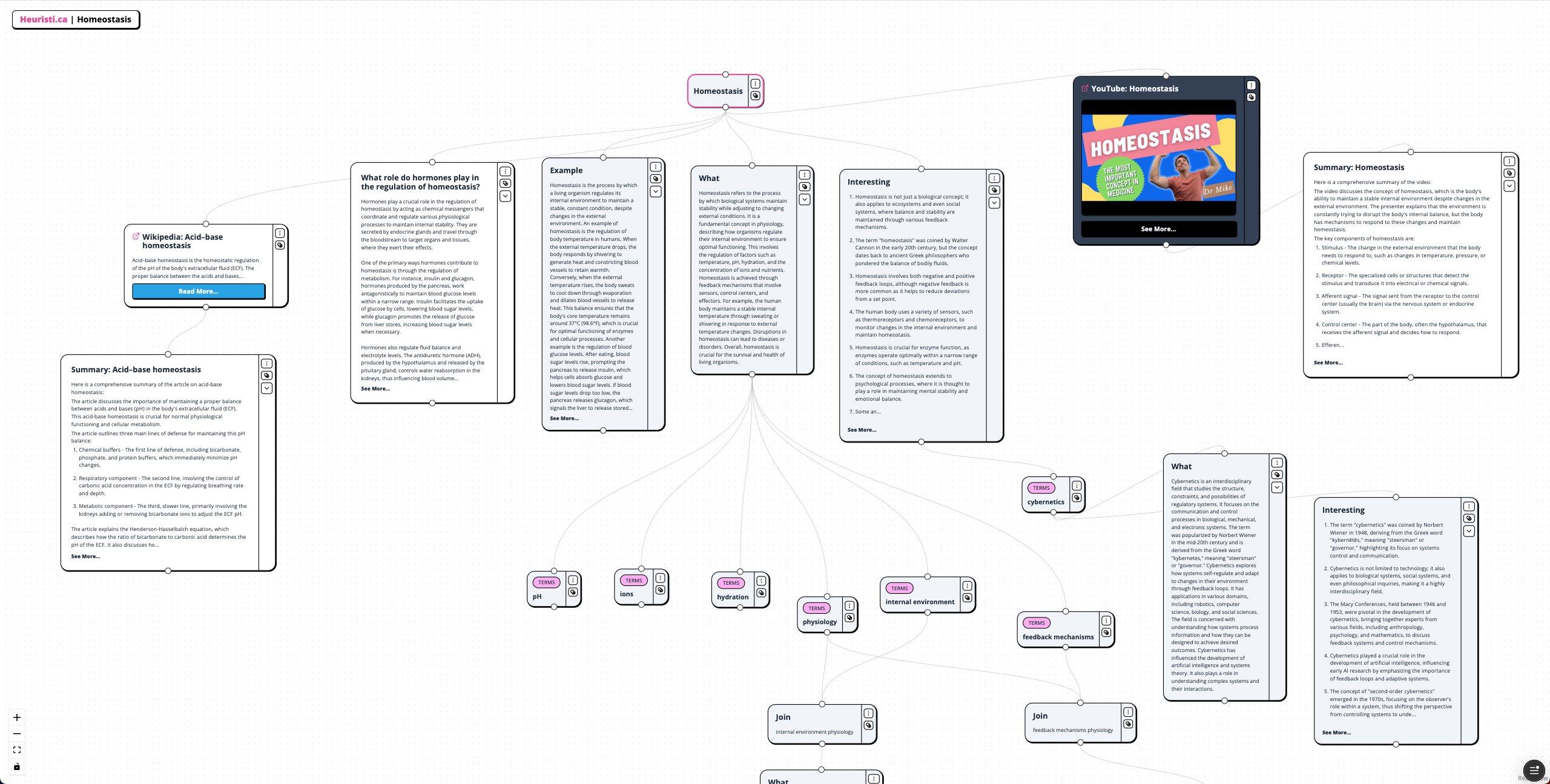
Open the homeostasis concept map →
The homeostasis template builds out the negative feedback loop structure and shows how it applies to thermoregulation, blood glucose, blood pressure, and osmotic balance. A useful umbrella map that connects to most other physiology topics.
Evolution and ecology
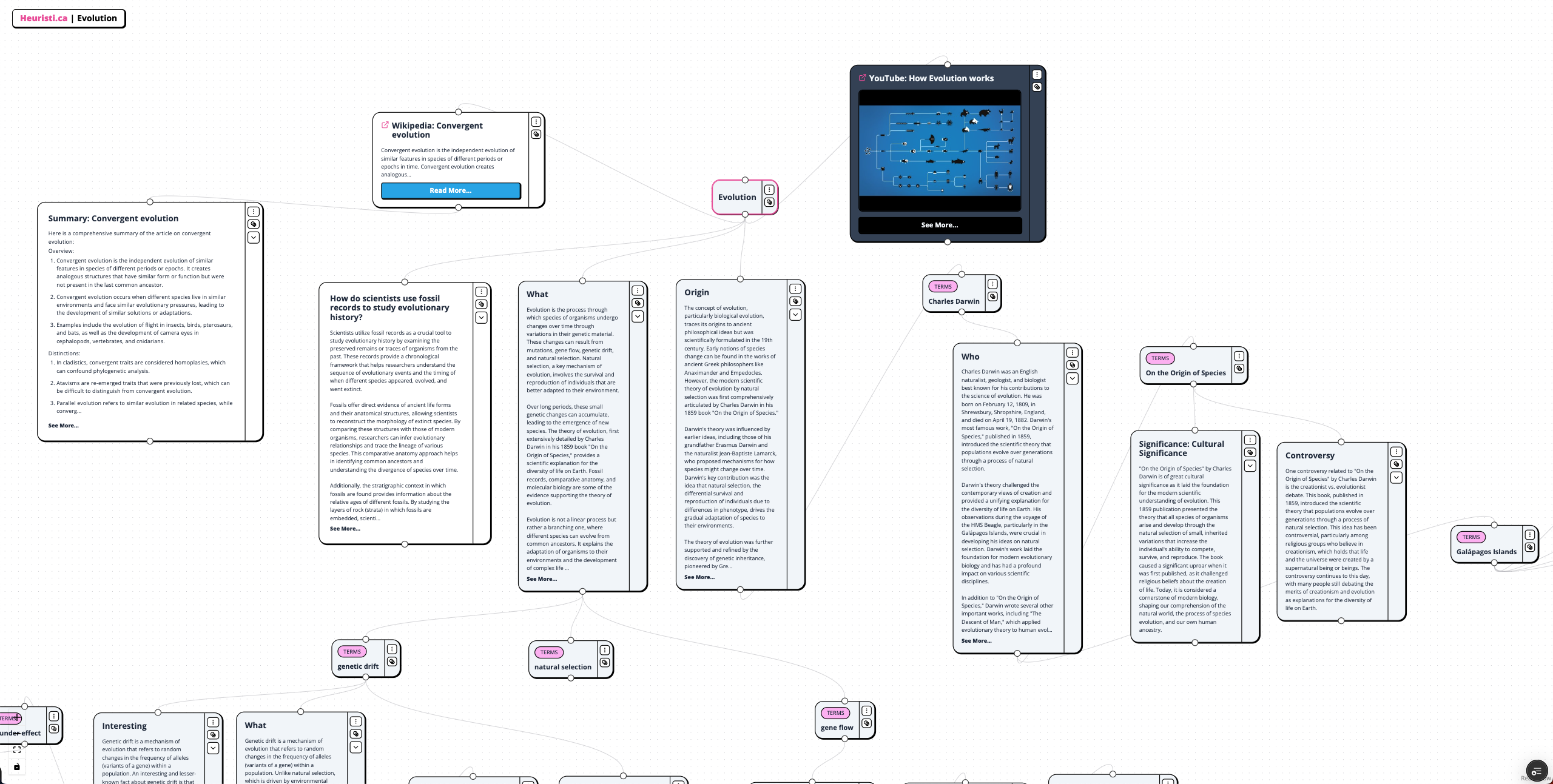
Open the evolution concept map →
The evolution template covers natural selection, the sources of genetic variation, evidence for evolution (fossils, comparative anatomy, molecular evidence), and the mechanisms behind evolutionary change (mutation, gene flow, genetic drift, selection).
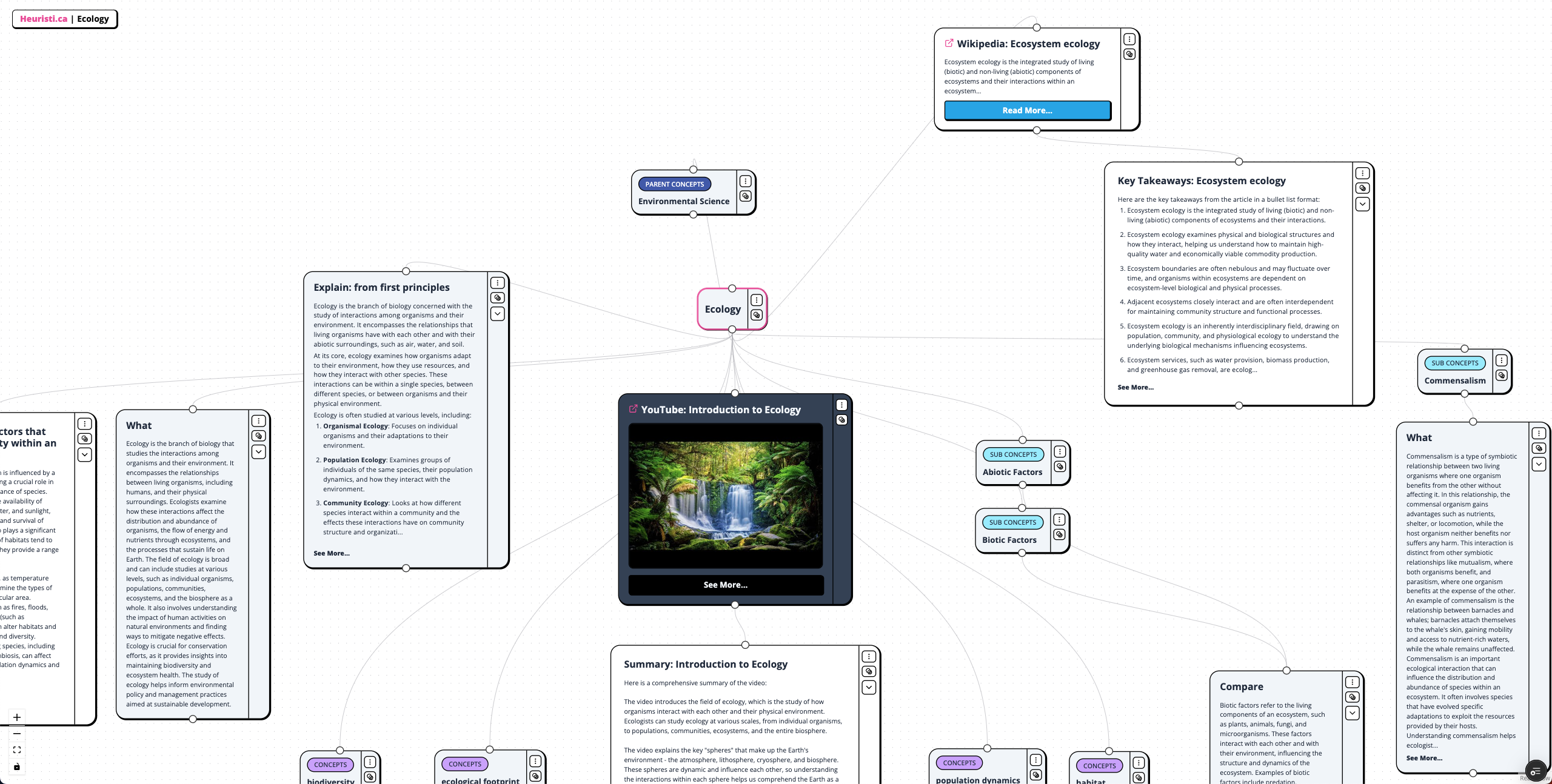
Open the ecology concept map →
The ecology template breaks down the levels of organization, from organism up to biome, and connects them to topics like energy flow, nutrient cycling, and species interactions.
Health and medicine concept map templates
These are condition-focused maps that cover pathophysiology, signs and symptoms, causes, and treatment categories. They cover the underlying medicine of a condition. They aren't structured as nursing care-plan templates (the kind with a patient at the center, NANDA nursing diagnoses, interventions, and expected outcomes). If you're a nursing or pre-med student, use them as the pathophysiology backbone of your own care plan, or generate a care-plan version with the AI by branching from a patient or diagnosis node.
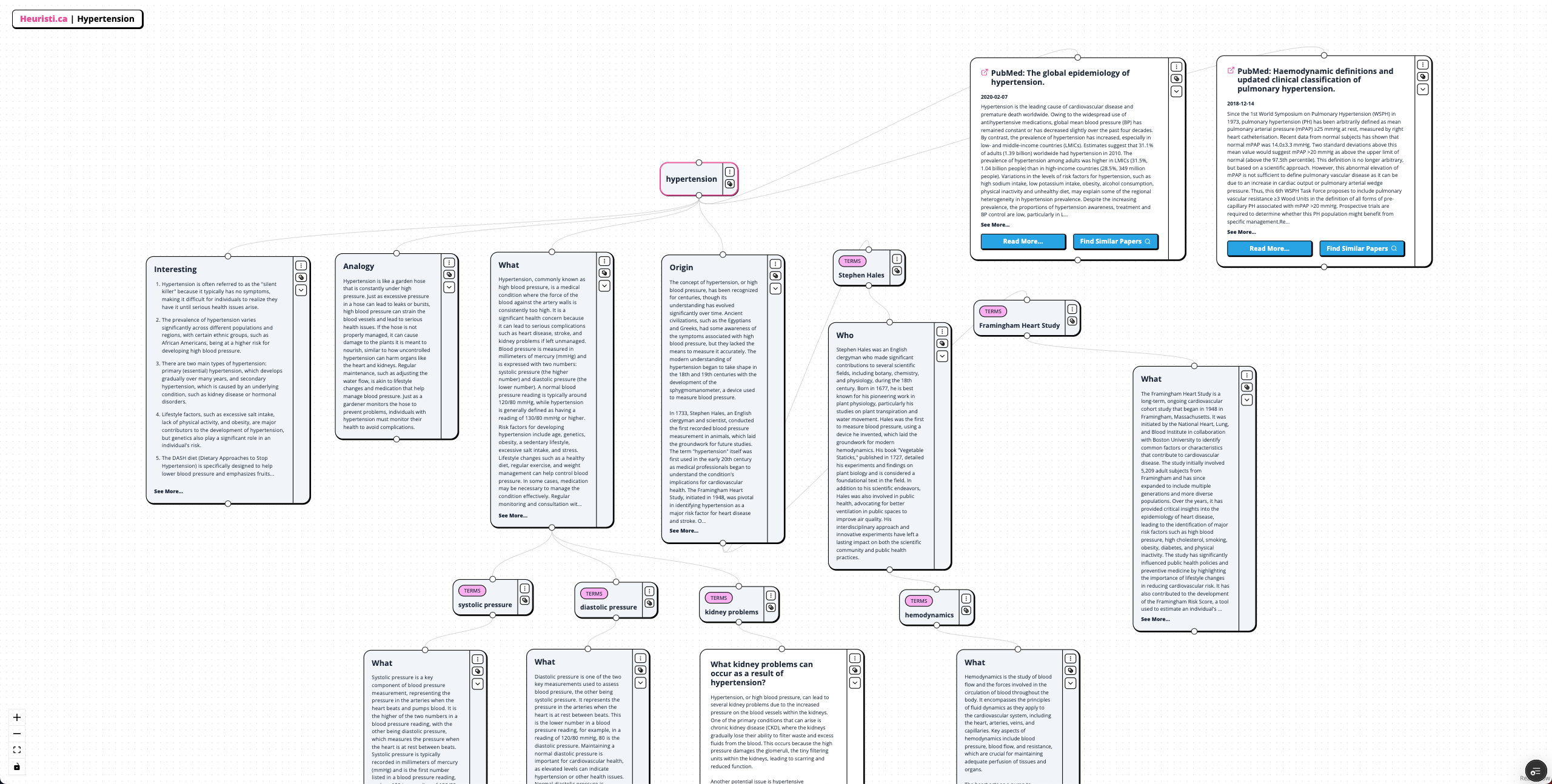
Open the hypertension concept map →
The hypertension template covers primary and secondary hypertension, the major risk factors, the mechanisms behind elevated blood pressure, target organ damage, and the drug classes used in treatment (diuretics, ACE inhibitors, beta blockers, calcium channel blockers).
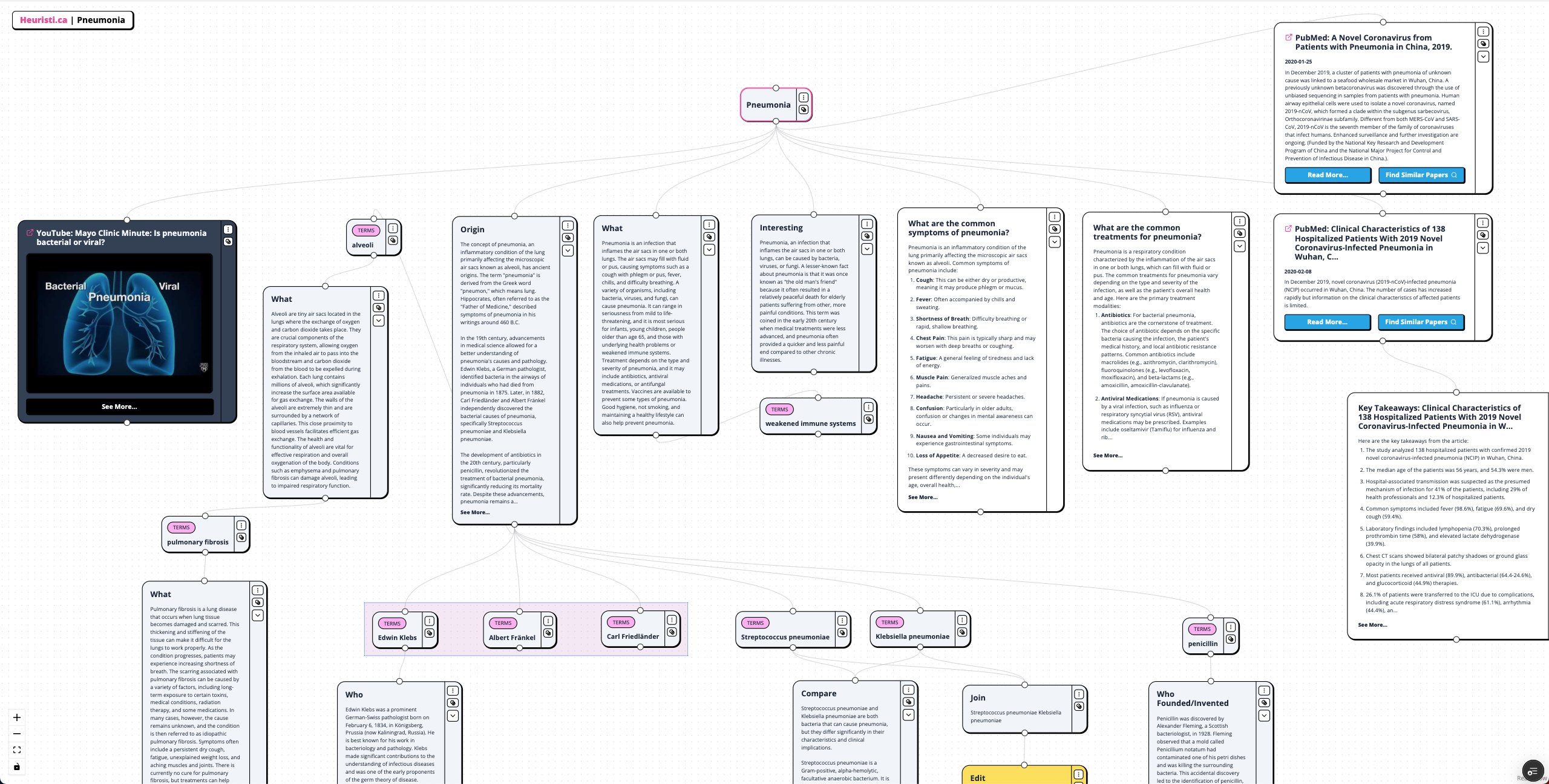
Open the pneumonia concept map →
The pneumonia template covers the types (community-acquired, hospital-acquired, aspiration), common pathogens, the pathophysiology of alveolar inflammation, clinical presentation, and treatment categories. Useful as a study aid before med-surg exams.
Physics concept map templates
A few physics templates for students mapping concepts in a foundational physics or general science course.

The atom template covers subatomic particles, atomic structure, isotopes, ions, and the relationship between electron configuration and chemical behavior.

Open the phase change concept map →
The phase change template branches into the six phase transitions (melting, freezing, vaporization, condensation, sublimation, deposition), the energy involved in each, and the underlying particle behavior.

The energy template covers the forms of energy (kinetic, potential, thermal, chemical, nuclear, electromagnetic), conservation of energy, and the relationship between work and energy.
Why interactive concept map templates beat blank printable ones
A search for "concept map template" turns up a lot of blank PDFs and Word documents: empty bubbles waiting for you to write something in. Those have a place if you're sketching on paper or projecting a template in a classroom. For studying, they fall short for three reasons.
First, a blank template doesn't teach you what to put in it. You're back to the original problem: how do you know the right way to break down photosynthesis or the cardiovascular system? An example map shows you a working structure you can adapt.
Second, paper templates can't grow. If you start mapping cellular respiration and realize you also need to map the Krebs cycle in detail, you're drawing a new diagram. An interactive map expands inline, with AI helping you build the new branch without breaking the existing structure.
Third, you can't link them. Concept maps get more useful when they connect to each other. A blood map that links to the cardiovascular map, that links to the homeostasis map, becomes a small knowledge system. PDFs sit in folders.
If you do want something to print, open any concept map on this site, expand it the way you want, then screenshot or export the result. You get a custom map matched to your study, not a generic blank.
How to make your own concept map template
If none of the examples above cover what you need, generate a new one. Heuristica builds concept maps from a topic, a document, or a YouTube video. Three ways to start:
- From a topic. Type a topic into the concept map maker, and the AI builds an initial map you can edit and expand.
- From a document. Upload a PDF or paste an article, and you get back a concept map of the main ideas and their relationships. Useful for textbook chapters and lecture handouts.
- From a YouTube video. Drop a video URL and get a map of the topics covered. Works well for course lectures and conference talks.
Every map you create is editable the same way the templates above are: click any node to expand it, edit labels, add cross-links, save to your library, generate flashcards from the contents, or share a public link.
Once a map is structured the way you want, duplicate it the next time you study a similar topic and reuse the structure. A map becomes its own template the second time you use it.
For a step-by-step walk-through of building a map from scratch, see how to make a concept map.
Frequently asked questions
Are these concept map templates free?
Yes. Every concept map linked above is free to open, view, and expand. You only need a Heuristica account if you want to save your edits or generate new maps from your own sources.
Can I edit the templates?
Yes. Click any node to rename it, change its color, add child nodes, or delete it. Click any connecting line to rewrite the linking phrase. The map is fully editable from the moment you open it.
Do you have printable or blank concept map templates?
The maps on this site are interactive rather than printable. You can screenshot any expanded map for a static copy, or export the visible canvas as an image. If you need a truly blank diagram to fill in by hand, free Word and PDF concept map templates are available from various education sites. The advantage here is that the AI helps you fill in the structure as you go, instead of leaving you to figure it out alone.
What subjects do you cover?
The library above is heaviest on biology, anatomy, and a few common health conditions, with some physics templates. Beyond what's listed, you can generate a map for any subject using the concept map maker: history, computer science, literature, business, psychology, languages.
Are these good for nursing students?
The health-condition maps (hypertension, pneumonia) work well as pathophysiology references for nursing coursework, but they aren't structured as nursing care-plan templates. If you need a care-plan format, generate a fresh map with your patient or diagnosis as the central node, and use the AI to branch out into assessments, nursing diagnoses, interventions, and outcomes.
How is this different from a mind map?
Concept maps label the lines between nodes, so each connection reads as a short statement (cells contain organelles, neurons transmit signals). Mind maps don't. For studying material where the relationships between concepts matter as much as the concepts themselves, concept maps tend to be more useful. See the full comparison in concept maps vs mind maps.
Can I turn a concept map into flashcards?
Yes. Open any map and use the flashcard generator to turn each node and linking phrase into a study card. Pair the visual map with spaced-repetition flashcards for stronger retention.