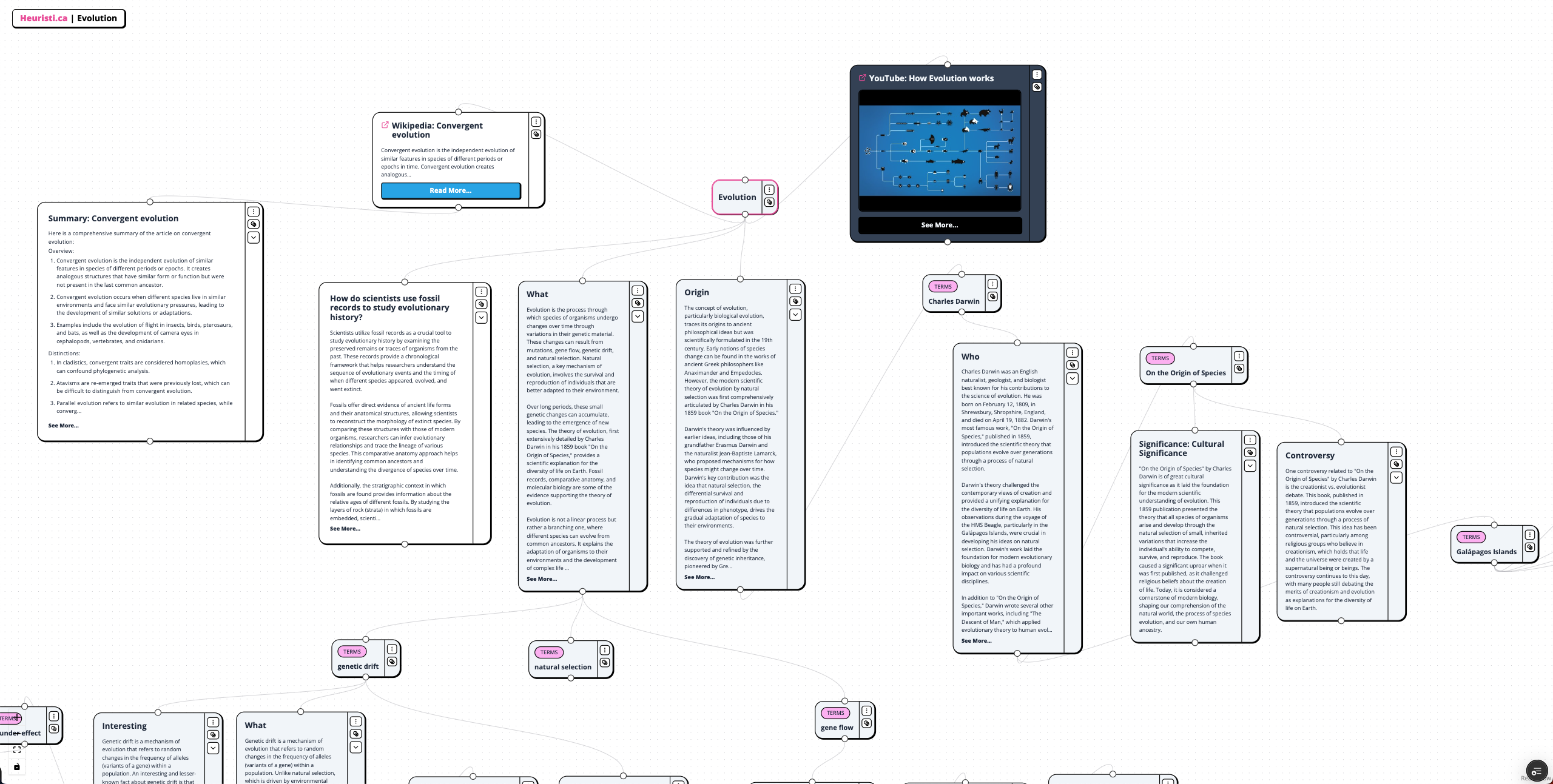
Evolution is the process through which species of organisms undergo changes over time due to variations in their genetic material. Key mechanisms include mutations, gene flow, genetic drift, and natural selection, with natural selection being a primary driver of adaptation and the emergence of new species. The theory of evolution, extensively detailed by Charles Darwin in his 1859 book "On the Origin of Species," explains the diversity of life on Earth, supported by evidence from fossil records, comparative anatomy, and molecular biology.
Genetic Drift
Genetic drift refers to random changes in allele frequencies within a population, particularly significant in small populations. It can lead to the fixation or loss of alleles, reducing genetic variation. An example is a small population of beetles where random events can drastically alter allele frequencies over generations.
Alleles
Alleles are different versions of a gene found at the same locus on a chromosome. They can be dominant or recessive, influencing traits and contributing to genetic diversity within a population.
Genotype vs. Phenotype
The genotype is the genetic makeup of an organism, while the phenotype is the observable characteristics resulting from the interaction of the genotype with the environment. Both concepts are crucial in understanding heredity and variation in traits.
Gene Flow
Gene flow, or gene migration, is the transfer of genetic material between populations through interbreeding. It introduces new genetic variations, enhancing adaptability and preventing genetic isolation. Examples include the introduction of Texas cougars to the Florida panther population to increase genetic diversity.
Founder Effect and Bottleneck Effect
The founder effect occurs when a small group establishes a new population, leading to reduced genetic diversity. The bottleneck effect describes a sharp reduction in population size due to environmental events, resulting in a loss of genetic variation. Both effects can significantly impact a population's adaptability and survival.
The Galápagos Islands
The Galápagos Islands are significant for their unique ecosystems and their role in Darwin's formulation of natural selection. The islands are home to many endemic species and serve as a living laboratory for studying evolution. Conservation efforts are crucial to protect these fragile ecosystems from various threats.
Charles Darwin
Charles Darwin was an English naturalist whose work laid the foundation for modern evolutionary biology. His observations during the voyage of the HMS Beagle, particularly in the Galápagos Islands, were pivotal in developing his theory of natural selection.
Significance of "On the Origin of Species"
Darwin's "On the Origin of Species" is culturally significant as it challenged contemporary views on creation and provided a scientific framework for understanding evolution. The book remains a cornerstone of biology and continues to influence discussions on the origins of life.
Controversy
The publication of "On the Origin of Species" sparked controversy, particularly in the creationist versus evolutionist debate. This ongoing discussion highlights the tension between scientific explanations of life's diversity and religious beliefs about creation.