Mind mapping is a way of laying out information visually, with a central idea in the middle and related branches spreading outward. The main benefit is simple: it matches the way the brain actually links ideas, through association rather than long lists. That single trait is what makes the benefits of mind mapping show up across studying, writing, planning, and everyday problem-solving.
This article looks at where those benefits come from, which ones hold up, and how to set up a map so you actually get them.
What is mind mapping?
A mind map starts with one central idea and branches outward into subtopics, with each branch able to split further into details. The position of each branch carries meaning: related ideas sit near each other, and the whole structure is readable at a glance.
The format is deliberately loose. You add a branch wherever a new idea fits, then keep going. If you want the step-by-step version of building one, the guide on how to use mind maps for studying walks through it. Mind maps are also often confused with concept maps, which use labeled links between nodes; the post on concept maps vs mind maps covers that distinction.
Why mind mapping works
The benefits trace back to a few things about how memory and attention work.
Association. Memory stores ideas by connecting them to other ideas, not as isolated facts in a sequence. A mind map makes those connections part of the layout, so the structure you see on the page lines up with the structure you are trying to build in your head.
Two channels instead of one. When you read a paragraph, you process words. When you build a map, you process words plus spatial position, branch direction, and color. Encoding the same information through more than one channel gives you more ways to retrieve it later.
Active construction. You cannot build a useful map by copying word for word. You have to decide what the main idea is, what counts as a subtopic, and how the pieces relate. That decision-making is the part that sticks.
The main benefits of mind mapping
Stronger recall and retention
Because a map encodes information spatially and visually, it gives you extra cues when you try to remember it. Recalling where a branch sat or what color it was can pull the whole idea back. A page of linear notes offers far fewer hooks.
Faster understanding of complex topics
A map shows the shape of a subject before you drill into specifics. You can see how many main parts there are, how they group, and where the detail lives. For a tangled topic, seeing that overview first makes the details easier to slot into place.
Better brainstorming and idea generation
Mind mapping suits brainstorming because there is no penalty for adding an idea in the wrong spot. You put the prompt in the center and branch outward as thoughts arrive, then reorganize later. The open structure tends to surface connections you would miss in a top-down list, which is why mind mapping overlaps so often with divergent thinking.
More efficient note-taking
Capturing keywords and short phrases instead of full sentences is faster in the moment and produces notes that are quicker to scan afterward. The branching layout also keeps you engaged with how points relate while you take them down, rather than just transcribing.
Clearer planning and problem-solving
For projects, essays, or decisions, a map lets you separate the big pieces from the details and spot gaps. You can see which branches are thin and need more work, and which parts connect to each other, before you commit to a sequence.
Who gets the most out of mind mapping?
Students use mind mapping to condense a chapter or a whole subject into a single reviewable picture, which helps with both comprehension and exam prep. Writers lean on it to plan structure: a map of an argument or article makes it easy to see whether the points flow before drafting a single paragraph. Professionals apply it to meetings, project scoping, and decisions, where laying out options visually beats a long document.
The common thread is that all three are working with information that has structure worth seeing. Anyone trying to understand how parts of something fit together gets value from making that structure visible.
Where mind mapping falls short
Mind mapping is not the right tool for everything, and pretending otherwise is how people end up frustrated with it.
It struggles with dense, sequential information where order matters more than grouping, like a legal procedure or a recipe; a numbered list serves that better. It is also a personal format by default. Because the connections between branches are implied rather than labeled, someone else reading your map may not follow your logic. When you need precise, shareable relationships, a concept map with labeled links is the better choice.
Knowing these limits is part of using the technique well. Reach for a mind map when you want to explore and remember, and reach for something else when you need strict order or explicit relationships.
How to get the most benefit from mind mapping
A few habits separate a map that helps from one that just looks busy. These apply whether you are using paper or a digital tool, and they hold across most mind mapping techniques.
- Keep each node short. One word or a short phrase per branch. The map is a prompt for recall, not a transcript.
- One idea per branch. If a branch is getting crowded, split it into sub-branches instead of cramming.
- Use color and grouping on purpose. Color-code by theme and place related ideas near each other so the layout itself carries meaning.
- Revise as you learn. A map built early will be incomplete. Come back and update it as your understanding grows, which doubles as a review session.
Building mind maps with Heuristica
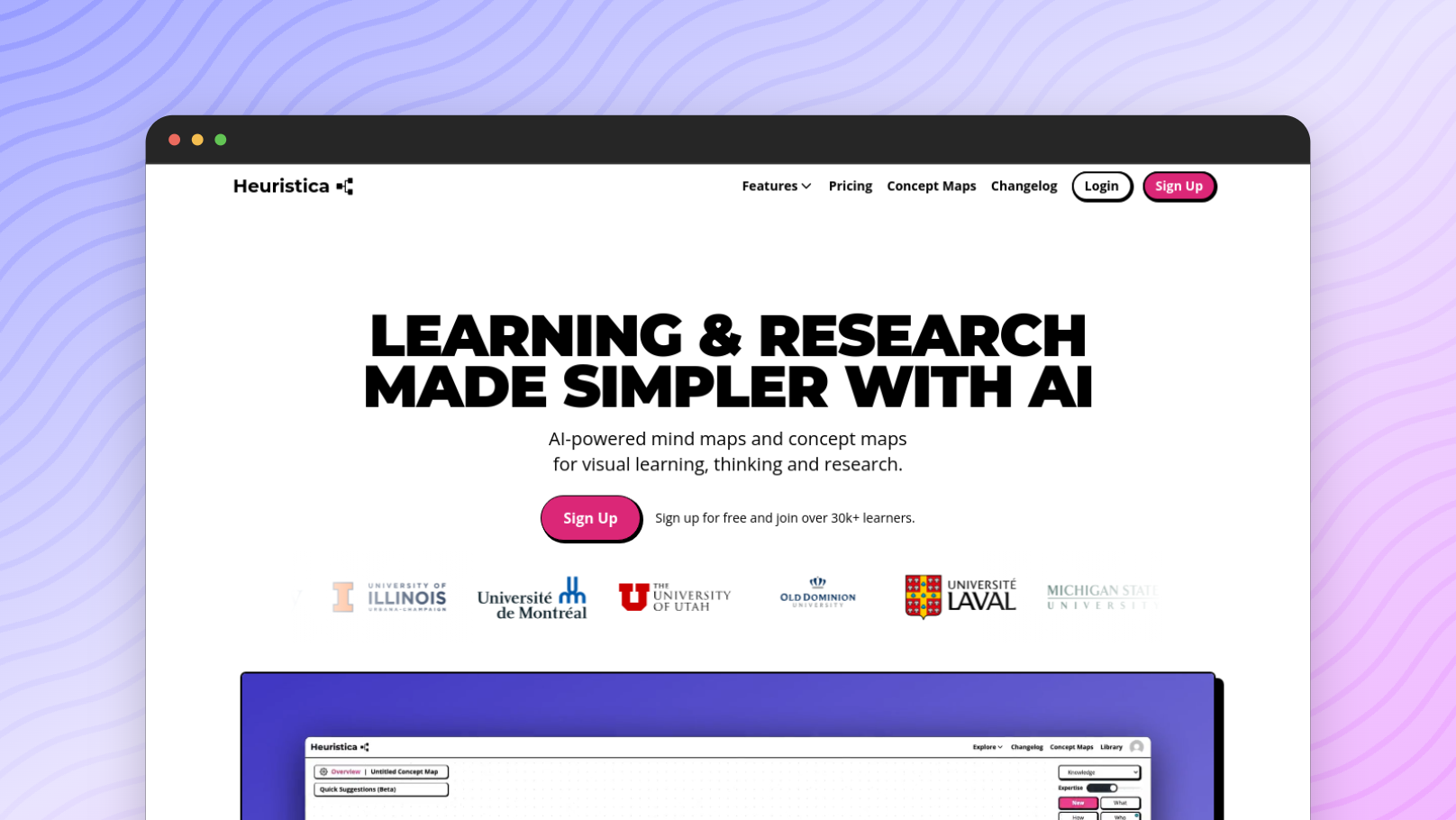
Heuristica is built around an interactive, node-based canvas that works well for mind mapping. You can start from any central idea and extend the map in any direction, attach links and source material to nodes, and reshape the structure as your thinking changes. The free AI mind map generator can also draft an initial map from a topic or a piece of source material, giving you a starting point to refine rather than a blank canvas. If your material is a video, the YouTube to mind map tool turns a transcript into a map directly.
The benefits compound when you connect mapping to review. From any map you build, you can generate flashcards for spaced repetition or a quiz to test recall, turning a visual layout into active practice.
The real payoff of mind mapping is not the diagram itself. It is that building one forces you to decide how ideas connect, and that decision is what you remember.