Mind maps are visual tools that organize information around a central idea, with branches radiating outward to subtopics and details. For studying, this structure has a practical advantage: it forces you to think about how ideas relate rather than just recording what was said.
This article explains how to build effective study mind maps and when to use them.
What are mind maps?
A mind map places the main topic at the center and branches outward to related subtopics, with each branch able to extend further into specific details. Each branch represents a connection, and the spatial arrangement shows the relationship between ideas at a glance.
The structure suits learning because it mirrors how memory works: associatively, through connections between related ideas rather than through linear sequences.
Why mind maps work for studying
Visual organization helps with both comprehension and recall. Seeing how topics branch from a central idea makes the subject's structure clear in a way that prose notes often don't.
Multiple encoding: the combination of text, visual structure, spatial position, and (when you add them) colors and images gives the brain more ways to encode and retrieve the same information.
Efficient note-taking: capturing keywords and concepts rather than full sentences is faster during a lecture and produces a record that's easier to scan during review.
Flexibility: the format allows ideas to be added anywhere, making it easy to update a map as you learn more without having to restructure everything.
Step-by-step: creating a study mind map
Step 1: Choose your central topic. Write it in the center of the page or screen. Be specific: "Photosynthesis" works better as a starting point than "Biology" because it gives the map a clear scope.
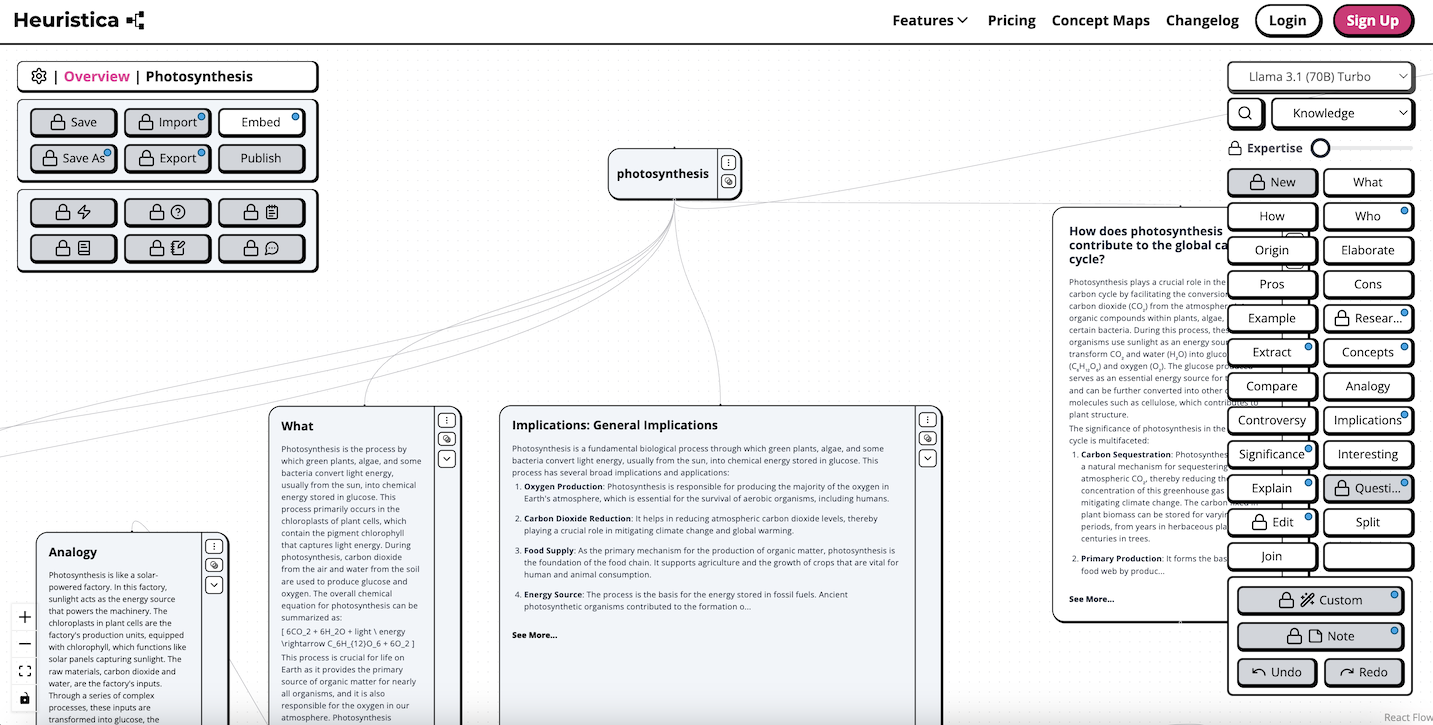
Step 2: Add main branches. These represent the major subtopics. For photosynthesis: Chloroplasts, Light Reactions, Calvin Cycle, Environmental Factors. Each becomes a branch radiating from the center.
Step 3: Build sub-branches. Under each main branch, add more specific details. Under Light Reactions: Photosystem I, Photosystem II, ATP Production.
Step 4: Add color and visuals. Use different colors for different branches. Add icons or images where they help, like a sun icon next to "light requirements." Visual variety makes the map more memorable.
Step 5: Review and fill gaps. Go back through the map and check that the major points are covered. Add what's missing and trim what doesn't belong.
Best practices for effective mind maps
Keep nodes short. Single words or short phrases, not full sentences. The map should be a scaffold for recall, not a transcript.
Use one idea per branch. If a branch is getting complicated, it probably needs to be split into sub-branches.
Group related ideas spatially. Similar concepts should sit near each other, even if they're on different main branches. Spatial proximity creates an additional memory cue.
Revise as you learn. A mind map built at the start of studying a topic will be incomplete. Return to it as you learn more and update it.
Mind maps vs. concept maps
Mind maps focus on a central idea and expand outward. Concept maps have multiple nodes interconnected to show labeled relationships between ideas. For a topic like electricity, a mind map would have "Current," "Voltage," and "Resistance" as separate branches, while a concept map would connect these to each other and to "Ohm's Law" and "Power" with labeled links explaining how they relate. A detailed comparison is in the post on Concept Maps vs Mind Maps.
Digital vs. hand-drawn
Digital mind maps are easier to edit, share, and store. They also integrate with other study tools and resources. Hand-drawn maps offer more creative freedom and the physical act of writing tends to reinforce memory. The best choice depends on whether you need to revise and share the map, or whether you're primarily using it as a personal study aid.
Using mind maps for different study activities
During lectures: start with the main topic at the center and add branches for each major point as it comes up. Sub-branches capture supporting details and examples. This keeps you engaged with the structure of what's being said, not just the content.
For textbook chapters: build a separate mind map for each chapter, summarizing the key sections into branches. This gives you a fast-reference overview when reviewing.
For exam preparation: mind maps serve as visual summaries of an entire subject, useful for getting the big picture before drilling down into specifics.
For note-taking: see the full guide on combining concept maps and mind maps for note-taking.
Heuristica for digital mind mapping
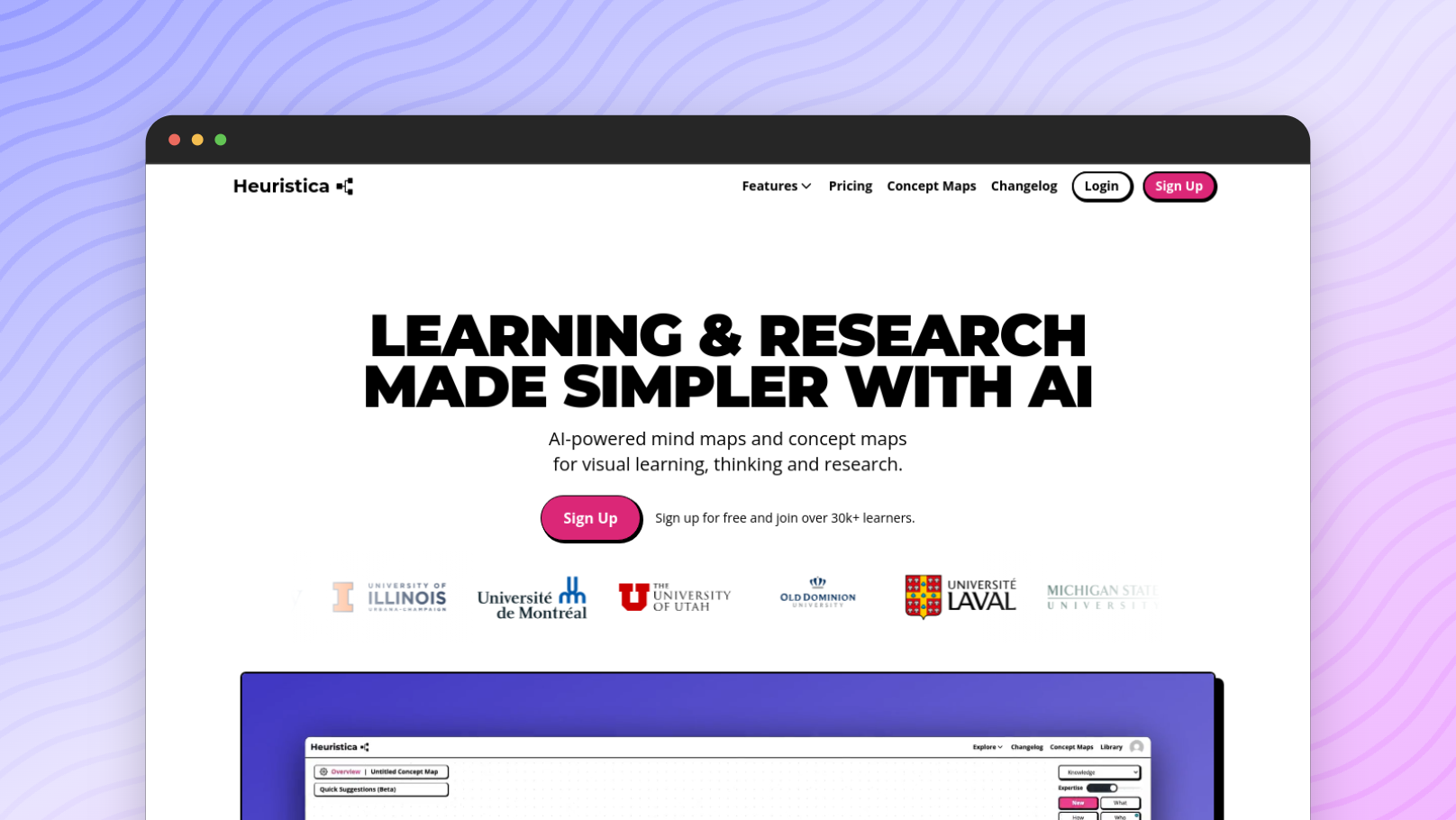
Heuristica is primarily a concept mapping tool, but its interactive, node-based interface works well for mind mapping too. You can build maps from any starting concept, attach links and research papers, and extend the map in any direction. The AI concept map generator can generate an initial structure from a topic or source material, which you can then reshape into the format that works for you.
From any map you build, you can generate flashcards for spaced repetition review or a quiz to test your understanding, turning a visual study session into an active recall workflow.
Browse examples including the cellular respiration and nervous system concept maps across different subjects to see what well-built visual maps look like in practice.